PRISM Tech Policy Newsletter - New Tech Competitors, Part Deux
Telecoms are the preferred national champion. Plus some interesting reads and graphs from the last month.

Friends of PRISM,
The future of the internet is being decided by nine people with an average age of 62. But the media coverage of Gonzalez v. Google is already so intense that I don’t feel the need to add to it here. Also, big news this week: Instagram is doing subscriptions – but that’s also been covered a lot!
Instead, I want to continue looking ahead. To do so, I’m following up on our post from a few weeks ago on how government as the new tech competitor. We’re laying out another new vector of competition for the tech giants: telecoms.
Please enjoy, and don’t hesitate to reach out with comments and ideas for future posts!
George
THE BIG TAKE
New tech competitors, Part Deux: Telecoms are the preferred national champions
Earlier in the year, it was reported that a group of EU telecoms players were planning on developing an ad network to rival Google and Meta. It’s now been given the go-ahead by the EU Commission, despite competition concerns.
The group has a specific rationale, and a clear angle (largely based on a trial in Germany from Deutsche Telekom and Vodafone that attempts a privacy-forward mechanism to provide ad data). However, it’s part of a large and growing role for telecoms firms in the digital sphere, and it’s one that is generally supported by governments.
Three key things to note:
Europe wants its own champions and Telecom is the most adjacent existing sector
India and China are a vision for what the future may look like in Europe
Telecoms may not yet be ready for prime-time in digital services
Europe wants its own champions
In June 2021, French President Emmanuel Macron said, “There is no sovereignty without local champions.” Shortly after, he announced a €30B fund to create the “high-tech champions of the future”. France is the leading proponent of the idea that Europe needs national tech champions to compete with the US tech giants. But, it’s a notion that is widely shared across the EU, including as a driver of the EU’s efforts to aggressively regulate tech (It might have been a different story if these were European companies!).
There are two ways to create this outcome:
New European startups: Similar to the French tech champions effort, there is now an EU-wide effort to create tech champions from the ground up – it’s literally called the European Tech Champions Initiative! This is path one, and a key pillar of the EU’s strategy.
Existing European champions: Another path is pushing or allowing existing champions to take leadership roles in tech. With the importance of 5G in the future of tech, the access to tech consumers through smartphone and internet plans, adjacent tech services like streaming, and the resulting ambitions and capabilities of the companies, telecoms are the preferred existing national champions to try to compete for Europe.
The EU ad network (and the EU’s approval of it despite obvious competition problems) is a sign of this. Potential efforts to make the large tech platforms pay telecoms firms for their network usage is another signal of who is on whose side.
India and China are a vision of the future
Both India and China are further along in this journey, and both also saw (and still see) telecoms as a key part of the strategy.
China: For many years, China has sought to develop and boost its own national champions, explicitly and at the expense of foreign firms. Its telecoms national champion, Huawei, is a key part of this. It is not just a telecoms firm, but a major technology player that is successful in mobile devices (including with its own OS), laptops, wearables, and more. Beyond this, it is an arm of Chinese geopolitical strategy, building 5G technology infrastructure in many countries around the world, causing national security headaches in the US as it does so.
India: India is following China’s path in many digital respects, but its “Make in India” push predates “Made in China” (it was a part of Modi’s 2014 campaign). Similar is that the telco national champions are playing a major role, and again, are supported by the government. The government selected their telecoms national champion, Jio, to lead the Indian 5G roll-out rather than use foreign providers. Jio is clearly looking to play in more technology realms than just telecoms: it has smartphones, messaging, video conferencing tools, e-commerce, and more.
Their ambition is only growing. I spoke to a former Jio Platforms exec. last week, who said: “The goal is to be in the top three of every sector where our existing user base can provide immediate scale advantages”.
Notably, Indian telcos have already made the ads move. Jio, Bharti, and Vodafone Idea have all launched AdTech platforms in India.
I won’t mention Japan and Softbank here, since their forays into tech and venture capital are the ultimate “zero interest rate phenomenon”. But what is clear overall is that tech is where countries want to compete, and telecoms are the most adjacent national champions available.
Are telecoms ready for prime time?
As Softbank shows, there isn’t a straight line from telecoms to technology victory. Other forays from telecoms into tech (and in particular AdTech) have also struggled. For example, Singtel is now selling its US digital marketing unit that it bought in 2012. AT&T sold its AdTech platform to Microsoft, Verizon to Yahoo, and Telenor to Experian, all in recent years.
Much of these failures have been due to integration issues, but another challenge for the EU efforts will be digital regulation. Telcos are opening themselves up to the sort of scrutiny that the major tech platforms have been dealing with for years.
Research suggests they might not be ready, particularly on the privacy rights they are claiming to improve with their ads venture. Ranking Digital Rights, a research program under the New America think tank, released a Digital Rights Scorecard for major Telcos in December. They didn’t perform well.
Ranking Digital Rights Telco Scorecard
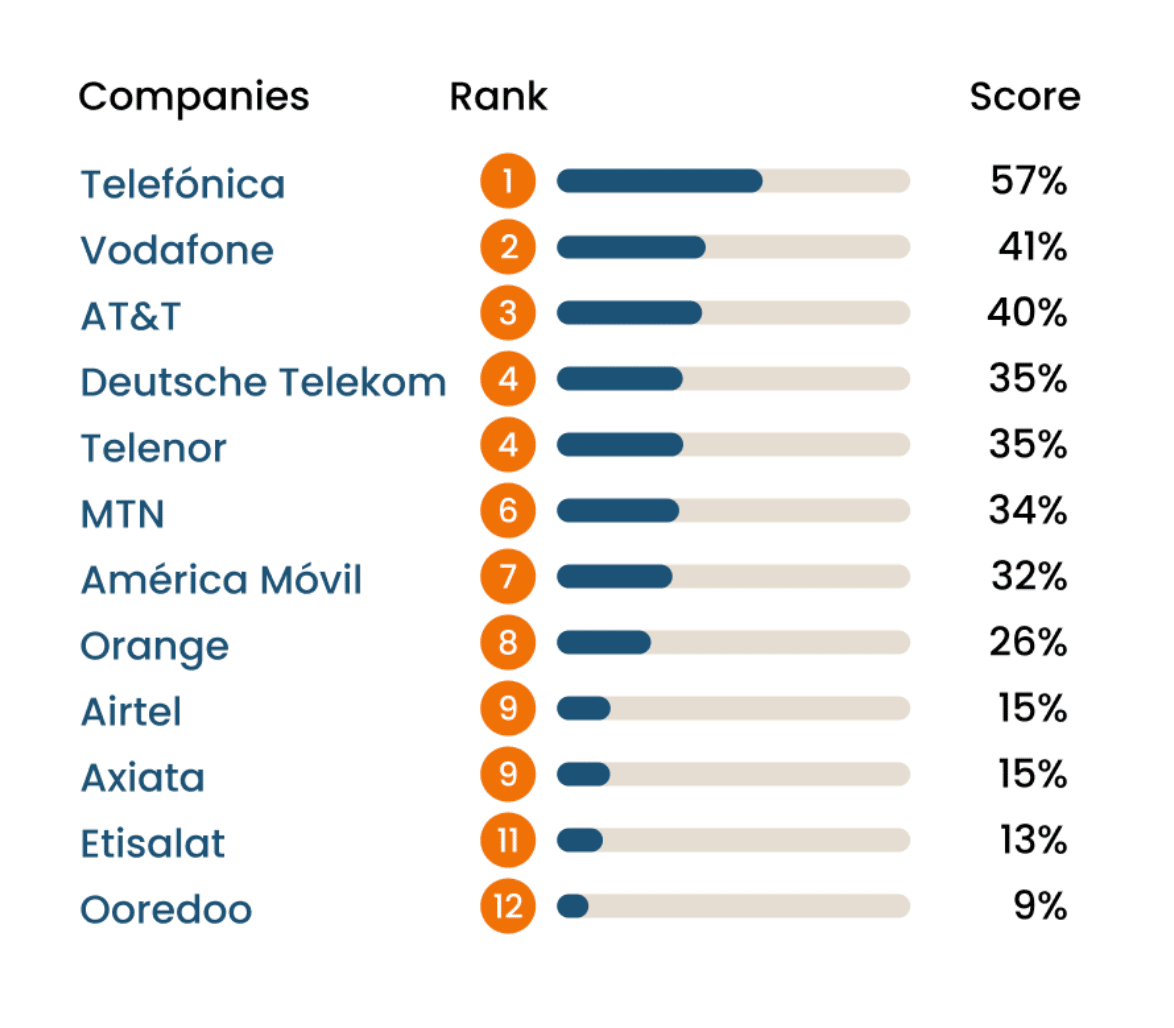
A few key quotes:
“Despite group-wide gains among telcos this year, all but one company still received a failing score.”
“Freedom of expression remains a serious weak spot for all telecoms.”
“Telcos enable major privacy violations, which may be used to facilitate various forms of commercial and even government surveillance, yet telcos share little about how they protect users from these risks.”
“The lack of privacy safeguards, combined with close ties between governments and telcos that are essential to the latter’s operations, means that operators sometimes end up aiding government-led violations of human rights.”
Put together, this creates a range of concerns for Telcos, including:
New market opportunities in a range of large digital markets.
The opportunity to lead their country’s technology competitiveness.
BUT, the competitive imperative whether fully ready or not as other Telcos increasingly make this move.
AND, the potential for massive regulatory scrutiny.
HMM, INTERESTING
Top 5 - The eye-catching reads
Trade Unions are coming for algorithms: The International Trade Union Confederation (ITUC) and AlgorithmWatch released a report mapping the activity of unions in relation to algorithmic management.
A great Twitter thread from Martin Husovec: Shows examples of content illegal in one EU member state but legal in others. Some good examples:
From Hans Peter Lehofer: In Hungary it is forbidden to depict the red star or hammer and sickle, and it was found that a Netflix same-sex kiss violates the law.
From Andrew Strait: “Right to be forgotten” rules are interpreted differently in different EU member states. On one extreme, in Finland, these rights extend to the deceased!
From ‘Mathias’: Slovakia bans denials of the crimes of "a regime based on communist ideology", Slovenia bans "ridiculing" the Holocaust, Portugal bans "grossly trivializing" the Holocaust, Luxembourg bans “denying the existence of a crime against humanity" more broadly. That’s already a lot to keep up with!
Singapore keeps leading the way on digital multilateralism: A real-time payment network deal established between Singapore and India allows for cross-border financial transactions using just phone numbers. This adds to a raft of digital trade deals Singapore has inked recently. This time it’s plated into an area of strength: cross-border payments.
One to follow – “the social life of algorithmic harms”: A series of essays from Data & Society on “The social life of algorithmic harms”. This is a growing repository of novel forms of algorithmic harm and their implications. Excited to read these as they are released.
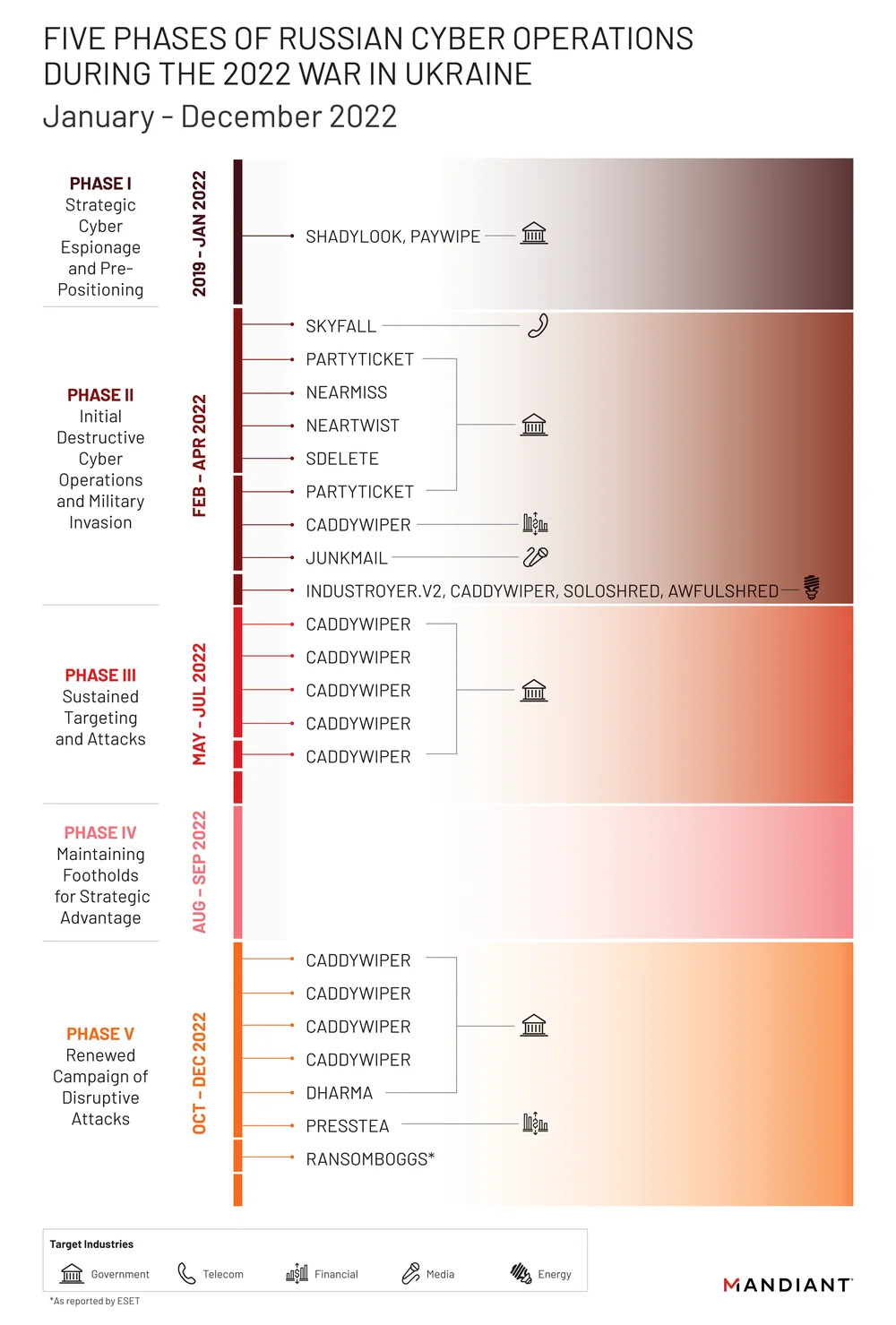
From Google and Mandiant - How the Ukraine conflict transformed the cyber threat landscape: Interesting read with interesting research like the following graphic:
AND, FINALLY
My top charts of the week
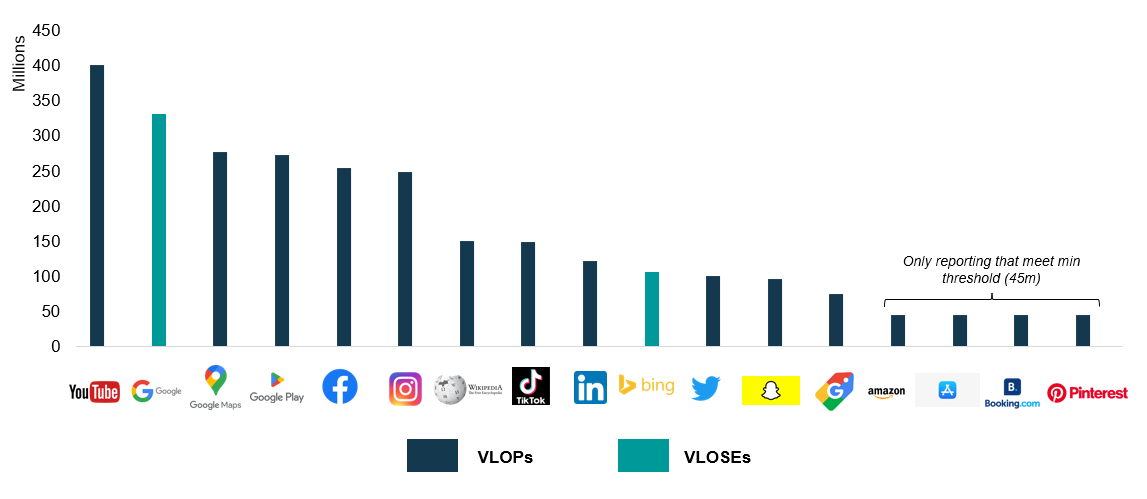
User numbers have been submitted for DSA designations
Numbers of EU users for platforms that meet the threshold to be a VLOP (very large online platform) or VLOSE (very large online search engine)
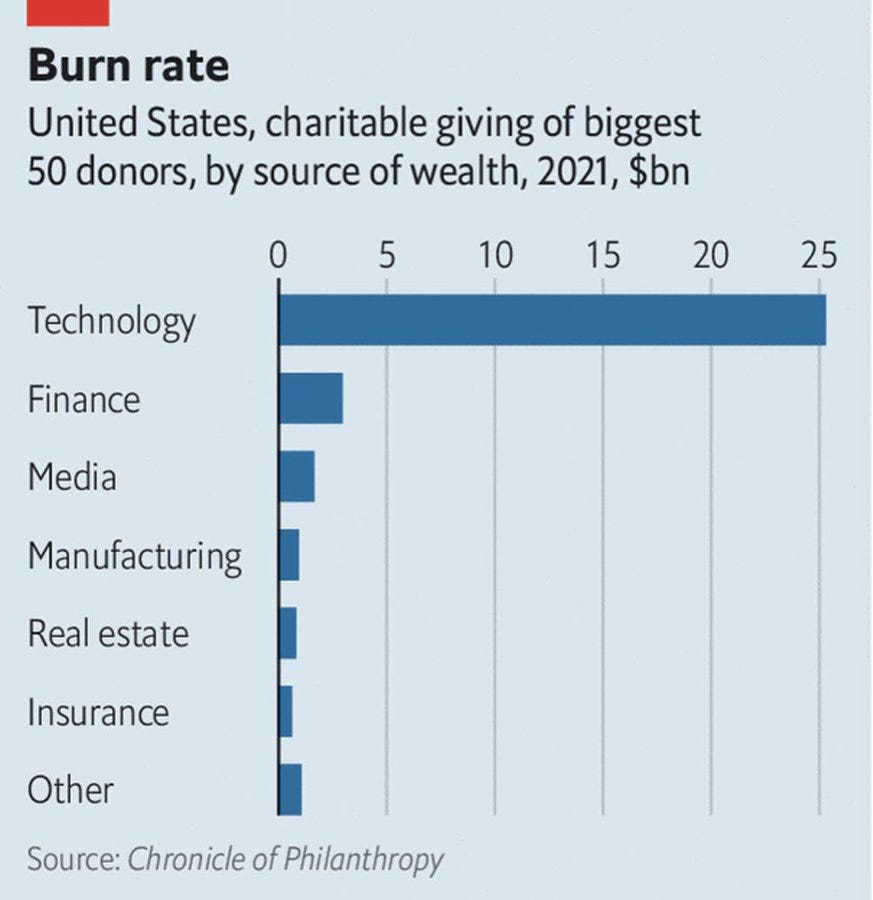
The tech crash is a huge loss for philanthropy
One of the real downsides - who will fill this gap?
51%!
No comment